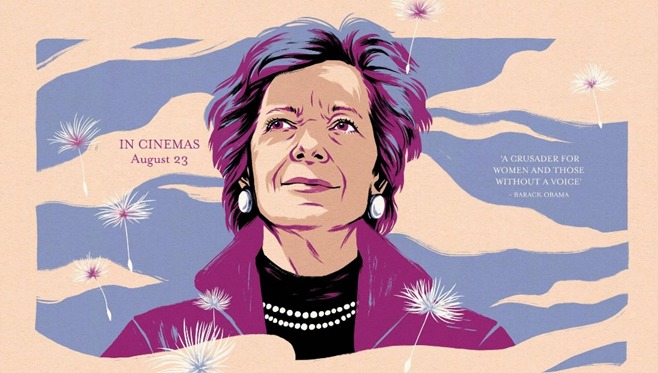
On 06 February 2026, SEWA, in collaboration with the Embassy of Ireland and the Ahmedabad Management Association (AMA), co-organised a special screening of Mrs. Robinson at the AMA Auditorium. The event was held as part of the celebrations for St. Brigid’s Day, honouring St. Brigid, Ireland’s revered woman saint, whose legacy symbolises strength, compassion, and leadership among women.
The evening carried special significance for SEWA. Mary Robinson shares a long-standing bond with SEWA and with Ela Bhatt. As fellow Elders, both Maryben and Elaben were part of a global community of moral leaders committed to justice and human dignity. Maryben has always held deep respect and admiration for Elaben and SEWA’s work. Her visit to SEWA was not merely ceremonial but deeply collaborative, as SEWA’s Swacch Aakash Campaign is an important partner in Project Dandelion. She therefore engaged directly with SEWA members to understand firsthand their leadership in women led climate action and grassroots resilience.
The screening brought together an esteemed audience including H.E. Mr. Kevin Kelly, Ambassador of Ireland to India, Mr. Patrick Duffy, Counsel General of Ireland, senior SEWA functionaries, development practitioners, academics, and members of civil society. The gathering reflected the shared values between Ireland and India on women’s leadership and climate justice.
Overview of the FilmMrs. Robinson traces Mary Robinson’s journey from Ireland’s first woman President to a global climate justice advocate and her role as a cofounder of The Elders. The documentary highlights her evolution into a moral voice on climate change, human rights, and gender equity. It was an engaging and inspiring film that reflects Maryben’s commitment to the idea of a women-led movement for human rights and climate justice. Further, Maryben’s humanitarian work and her enthusiasm, despite her advancing age, was infectious and was reflected in her interactions post the screening.
Fireside Chat and ReflectionsThe screening was followed by a fireside conversation moderated by Leena Mishra, featuring Mary Robinson and filmmaker Pat Mitchell, followed by an interactive Q&A session.
During the discussion, Maryben spoke warmly about SEWA. She reflected on:
She emphasised that climate justice cannot remain confined to global policy spaces; it must be anchored in community action. She noted that SEWA represents precisely this bridge — translating global commitments into local resilience.
Pat Mitchell shared insights into the making of the documentary, highlighting the intention to humanise climate discourse and foreground lived realities rather than abstract negotiations.
The audience engaged actively during the Q&A, raising questions on the societal barriers faced by women, intergenerational leadership with women and the helm, and the role of women in shaping just climate transitions.
Key Reflections and TakeawaysThe evening reinforced that climate change is fundamentally a justice issue. Leadership grounded in ethics and human dignity remains essential.
The shared journeys of Maryben and Elaben reflect how elder women leaders shape movements that outlast individuals and continue through communities.
The celebration of St. Brigid’s Day ( honouring a woman saint) alongside Mary Robinson’s advocacy and SEWA’s grassroots climate work created a powerful symbolic alignment: women leading change at every level.
SEWA’s work demonstrates how global climate discourse must connect with the lived experiences of women in the informal economy.
The evening reaffirmed SEWA’s commitment to strengthening women’s leadership in climate resilience and deepened bonds between diplomatic institutions and grassroots movements working toward equitable climate transitions.